
August 19, 2026 | Laser Treatments, Uncategorized
6 minute read
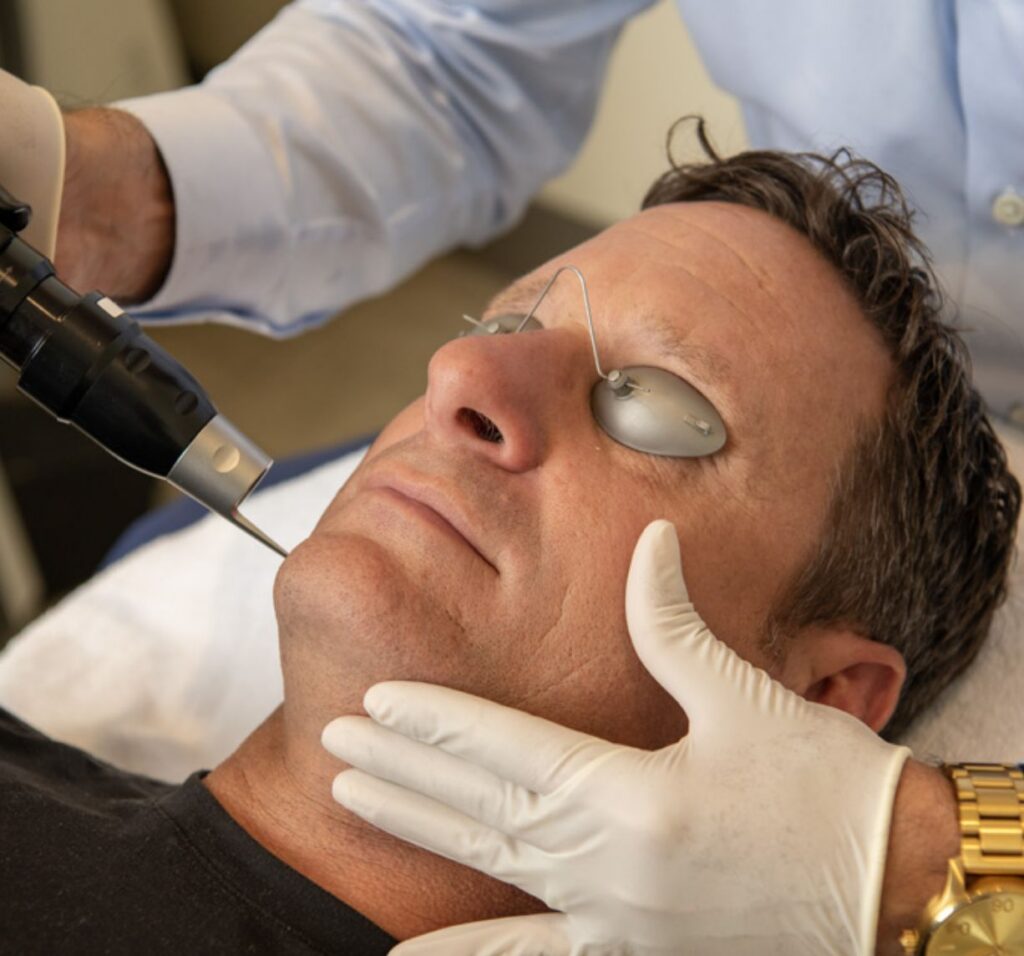
If you have researched treatments for sun spots, acne scars, or early fine lines, you have probably run into the name PicoSure. It gets described in ways that sound like marketing: faster than other lasers, gentler than other lasers, works on tattoos and skin. Unusually, most of that is just physics. Here is what the device actually does, in plain English.
What is PicoSure laser?
PicoSure, made by Cynosure, was the first picosecond aesthetic laser cleared by the FDA. A picosecond is one trillionth of a second, and that number is the whole story. Older lasers (including the nanosecond “Q-switched” lasers they largely replaced) deliver energy about 100 times more slowly and rely heavily on heat. PicoSure’s pulses are so short that they shatter their target mechanically, the way a sharp tap cracks glass, using pressure more than heat.
Less heat matters for two reasons. It spares the surrounding skin, which means less irritation and less downtime. And it works by breaking pigment, whether that pigment is a sun spot, the discoloration left by acne, or tattoo ink, into fragments small enough for your body’s immune system to clear away naturally.
What does PicoSure treat?
PicoSure is FDA-cleared for three categories of skin concern, treated in our office with the FOCUS lens array:
- Pigmented lesions: sun spots, age spots, freckles, and patches of uneven tone on the face, neck, chest, and hands.
- Acne scars: the pressure wave stimulates new collagen and elastin in the treated area, gradually smoothing pitted or uneven texture.
- Fine lines and wrinkles: the same collagen response softens early aging signs without needles or surgery.
The same device, running different settings and wavelengths, is also one of the most effective tools available for tattoo removal. If that is what brought you here, our laser tattoo removal in Eugene page covers that use in detail, including how many sessions tattoos typically take.
What is a treatment session like?
Sessions are short, and most patients tolerate them easily. After a consultation with one of our Certified Advanced Estheticians, the treatment area is cleaned and, for sensitive areas, a numbing cream can be applied. The laser itself feels like a series of quick snaps against the skin. Afterward you can expect some redness, similar to a mild sunburn, that typically settles within hours. Most patients go straight back to work or errands the same day.
That last part is PicoSure’s practical advantage over traditional resurfacing. Ablative lasers can deliver dramatic change but cost you days of visible recovery. PicoSure trades a single dramatic session for a series of gentle ones, with almost no interruption to your life. One of our patients put it simply: she had been told pico was a great alternative to a Fraxel treatment, and found there was no downtime and still immediate results.
How many sessions will you need?
It depends on what we are treating. Lighter sun damage often shows visible improvement after a single session. Deeper pigment and acne scarring usually call for a short series, commonly two to four sessions spaced several weeks apart, because collagen remodeling takes time. Results build gradually: skin tone evens first, and texture improvements continue developing for months after the series ends. You will get a specific plan, with a specific number, at your consultation before you commit to anything.
Is PicoSure safe for your skin?
Because picosecond pulses rely less on heat, PicoSure can safely treat a wider range of skin tones than many traditional resurfacing lasers, which carry higher pigmentation risks for deeper skin tones. It is not for everyone, though. Active skin infections, certain medications, a recent tan, and pregnancy are all reasons to wait or choose another approach. A brief medical review comes before any treatment plan.
Aftercare: protecting your results
Aftercare is simple but not optional. Treated skin is more sun-sensitive while it heals, so daily broad-spectrum SPF is the one non-negotiable, and it is also what keeps new sun spots from replacing the ones you just treated. For the first day or two, skip hot yoga, saunas, and anything abrasive on the treated area, and keep skincare gentle: cleanser, moisturizer, sunscreen. Treated pigment often darkens slightly before it flakes away over the following days. That is the treatment working, not a side effect, so resist the urge to exfoliate it off early.
Frequently asked questions
Pico laser is the generic category; PicoSure is the original branded device in that category. If a med spa advertises pico laser treatments, it is worth asking which device they use.
Most patients describe quick snapping sensations rather than pain. Numbing cream is available, and sessions are short.
Sometimes, and cautiously. Melasma is hormone-driven and can rebound after any laser, so it needs an individualized plan and honest expectations. Bring it up at your consultation and the laser team will tell you whether treating it makes sense in your case.
Collagen improvements are long-lasting. Pigment results last as long as you protect the skin; new sun exposure creates new sun damage, so daily SPF is the maintenance plan.
Cost depends on the treatment area and the number of sessions in your plan. Consultations are free. Full details, including candidacy and what the device treats, are on our PicoSure laser treatments page.
CURIOUS WHETHER PICOSURE FITS YOUR SKIN?
The honest answer requires seeing your skin. Consultations with our laser team are free, and you will leave with a specific plan and specific pricing, whether or not PicoSure ends up being the right tool. Schedule a consultation or call (541) 687-8900.